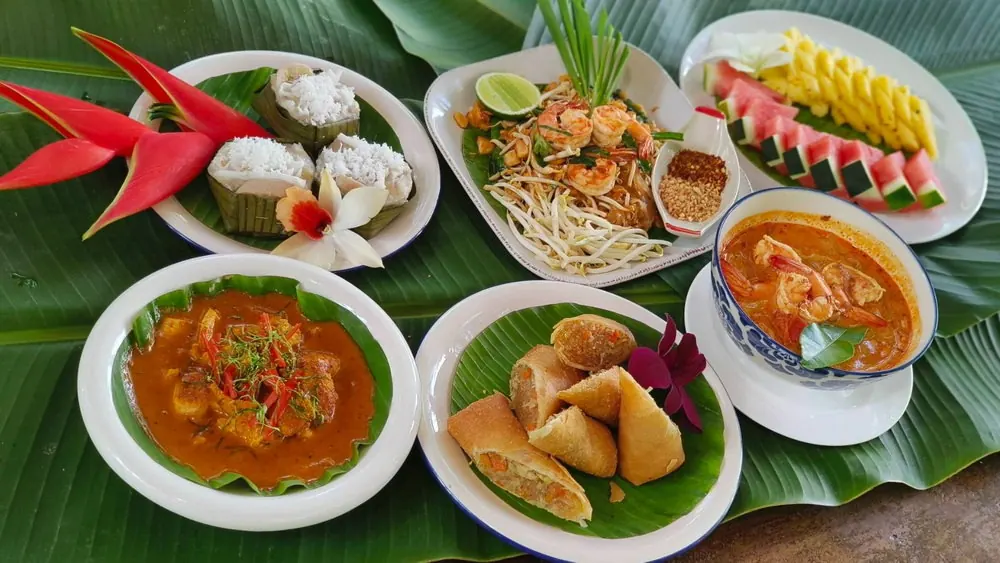
Thai Recipes: Ingredients and Techniques to Take Home
Recreating Thai recipes at home starts with understanding ingredients and techniques. This guide explains aromatics, seasoning, and curry paste, with questions to bring to a cooking class at Old Phuket Farm. For the five-dish class menu and booking details, see our cooking class page.
What Makes a Recipe "Authentic"?
Authenticity in Thai cooking isn't about rigid adherence to a single recipe - every Thai grandmother has her own version of pad thai. It's about understanding the principles: the balance of flavors, the quality of ingredients, the techniques passed down through generations.
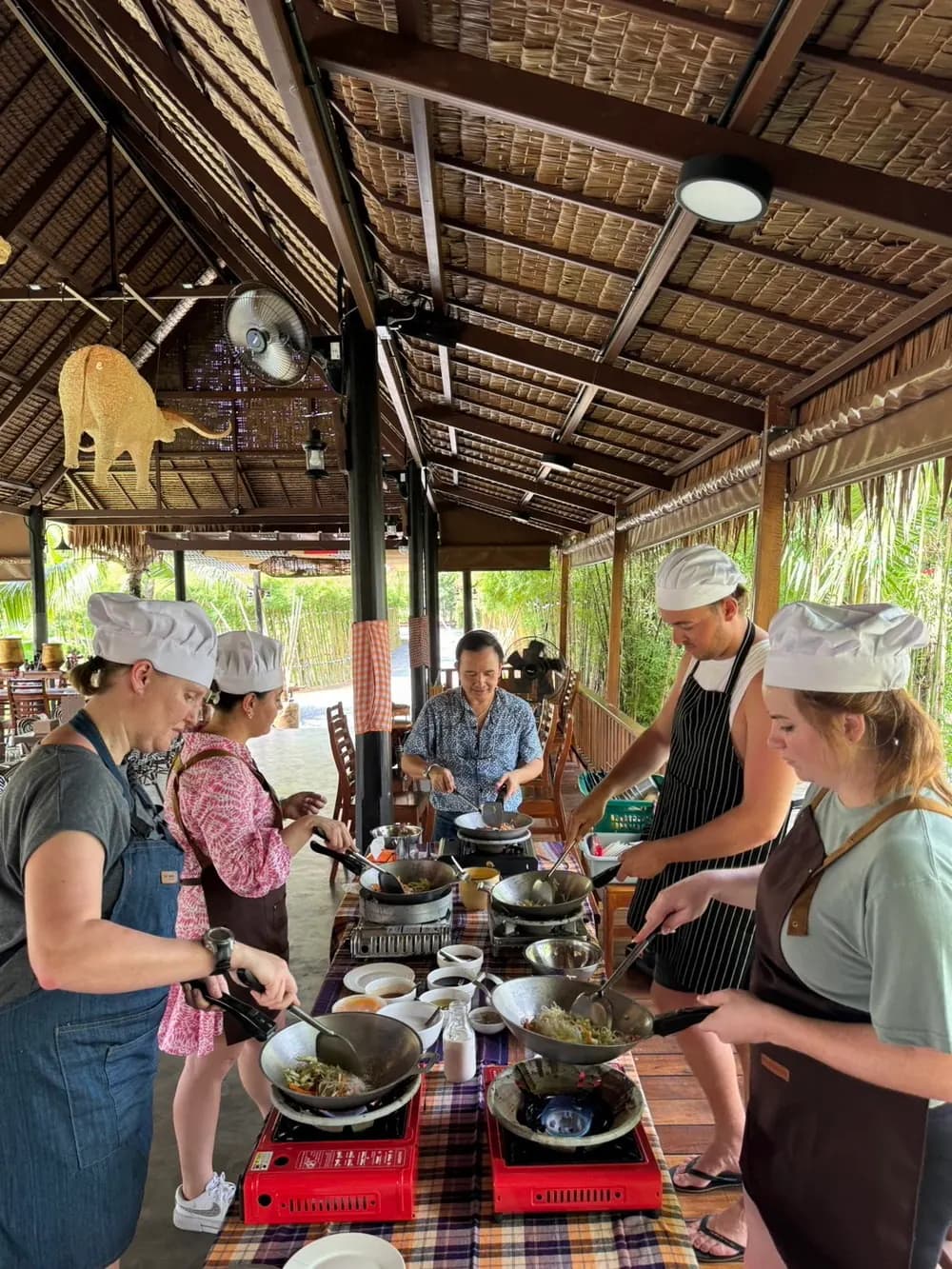
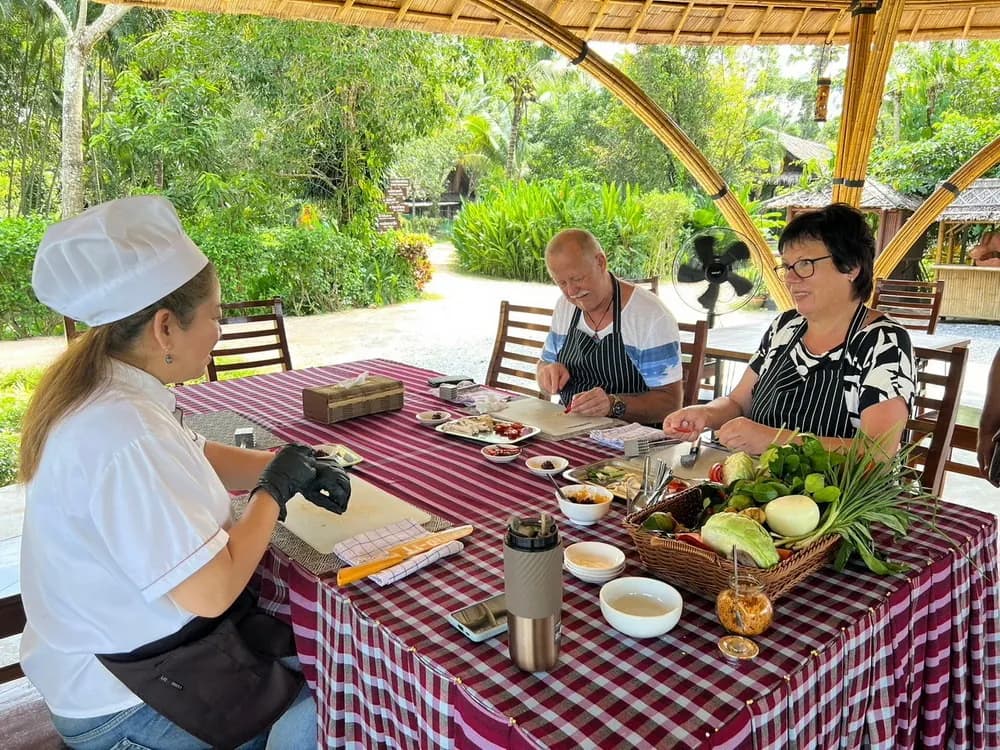
At Old Phuket Farm, the cooking class combines demonstrations with hands-on preparation. Ask questions while the chef works and make notes about the texture, aroma, and seasoning at each stage.
Essential Authentic Thai Recipes
Green Curry (Gaeng Keow Wan)
The authentic version starts with a paste made from scratch - green chilies, shallots, garlic, galangal, lemongrass, coriander roots, cumin, white pepper, and shrimp paste. Pounded in a mortar until silky smooth, this paste becomes the soul of the curry. No store-bought paste comes close.
Pad Thai
Authentic pad thai is about balance and technique. The wok must be screaming hot. The noodles should be chewy, not mushy. The tamarind sauce needs the perfect sweet-sour balance. And it should never, ever be red.
Tom Yum Goong
This iconic soup showcases the Thai approach to flavor building. Each ingredient - lemongrass, galangal, kaffir lime, bird's eye chili - adds a distinct note while harmonizing with the others. Authentic tom yum is clear, not creamy.
The Secrets Behind Great Thai Food
When following Thai recipes, pay attention to these practical details:
- Fish sauce quality matters: Good fish sauce should smell pungent but not rotten, with a deep amber color
- Palm sugar is not optional: Regular sugar doesn't provide the same complex sweetness
- Fresh over dried: Dried herbs are fine in a pinch, but authentic Thai cooking prioritizes fresh aromatics
- Pounding vs. blending: Mortar and pestle releases oils differently than a blender - the texture and flavor are distinct
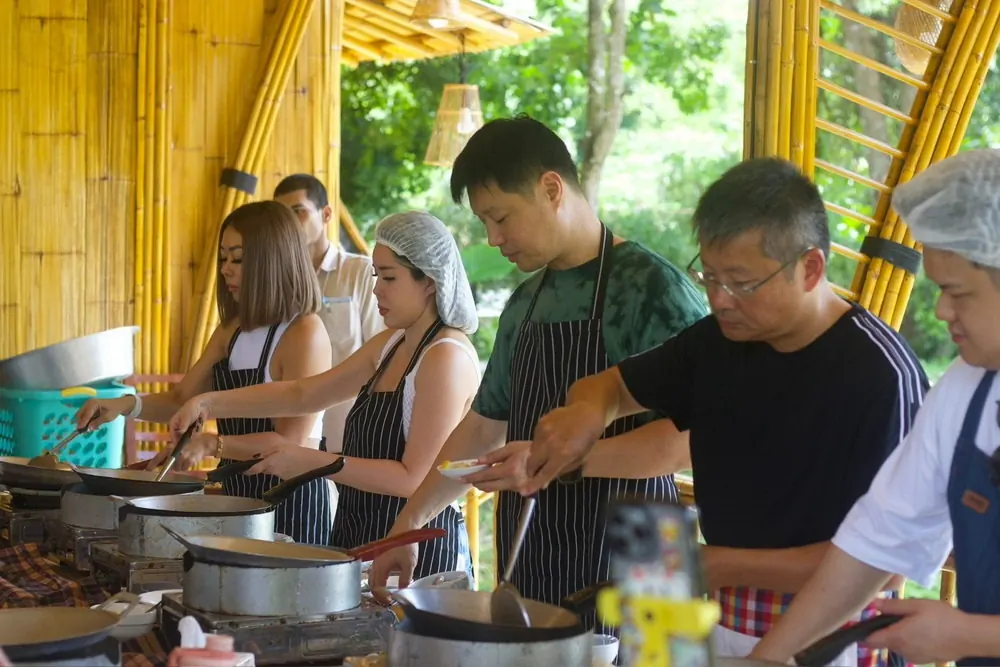
- High heat, fast cooking: Thai stir-fries happen in minutes, not a leisurely simmer
Learning Authentic Recipes
Books and videos can teach you recipes, but authentic Thai cooking is best learned in person. The subtle techniques - how hard to pound, when the paste is "ready," how to know when the wok is hot enough - these transfer better through demonstration than description.
At our cooking classes, you'll learn authentic recipes in the most authentic way: hands-on, with expert guidance, using ingredients harvested that morning. You'll leave with recipes, yes - but more importantly, with understanding.
Taking Authenticity Home
When cooking at home, check the recipe before shopping. Ask your instructor which ingredients can be substituted and which define the dish. A local Asian grocery may stock aromatics and sauces that are harder to find elsewhere.
Authenticity is ultimately about respect - for the cuisine, for the traditions, and for the people who've kept these recipes alive for generations. When you cook Thai food authentically, you're participating in a culinary tradition that stretches back centuries.
Ready to Experience Old Phuket Farm?
Book your authentic Thai experience today and create memories that last a lifetime. We offer cooking classes, farm tours, and cultural activities for all ages.