Learn Thai Cooking: A Beginner’s Skills Guide
Learning Thai cooking begins with a few practical skills: recognizing aromatics, preparing ingredients, balancing seasoning, and controlling heat. This beginner’s guide explains what to pay attention to during a class and what to practice when you return to your own kitchen.
Why Learn Thai Cooking in Thailand?
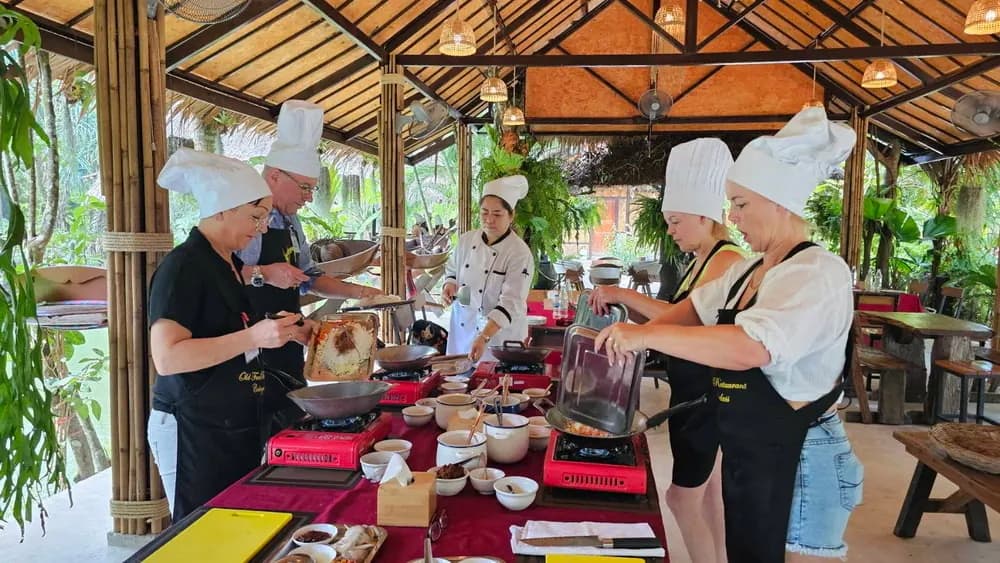
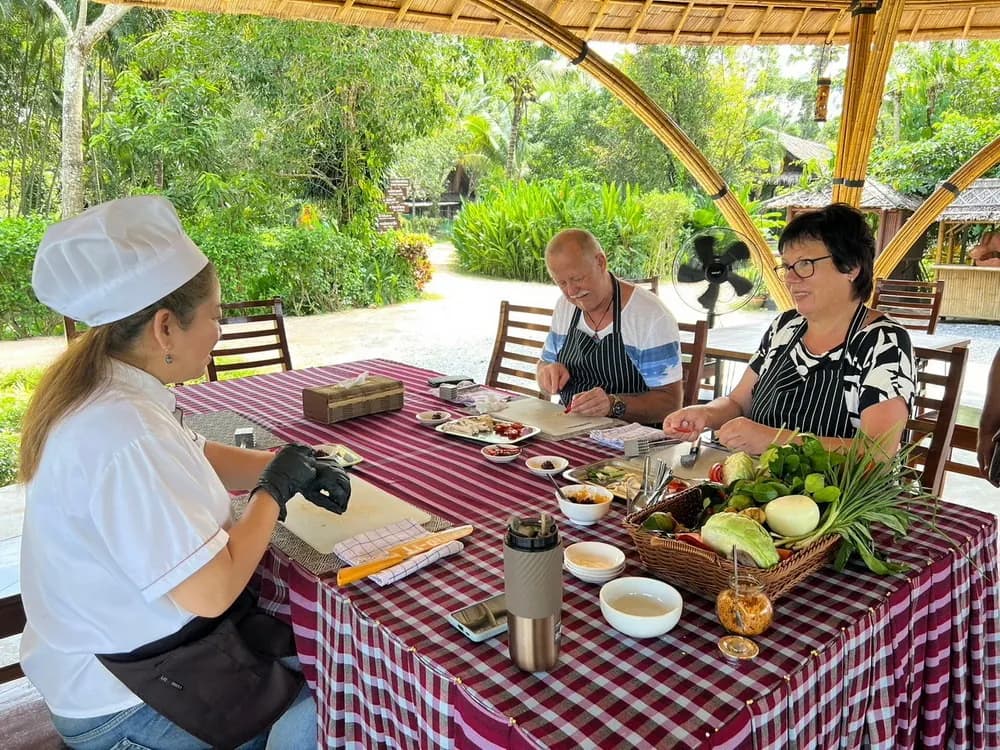
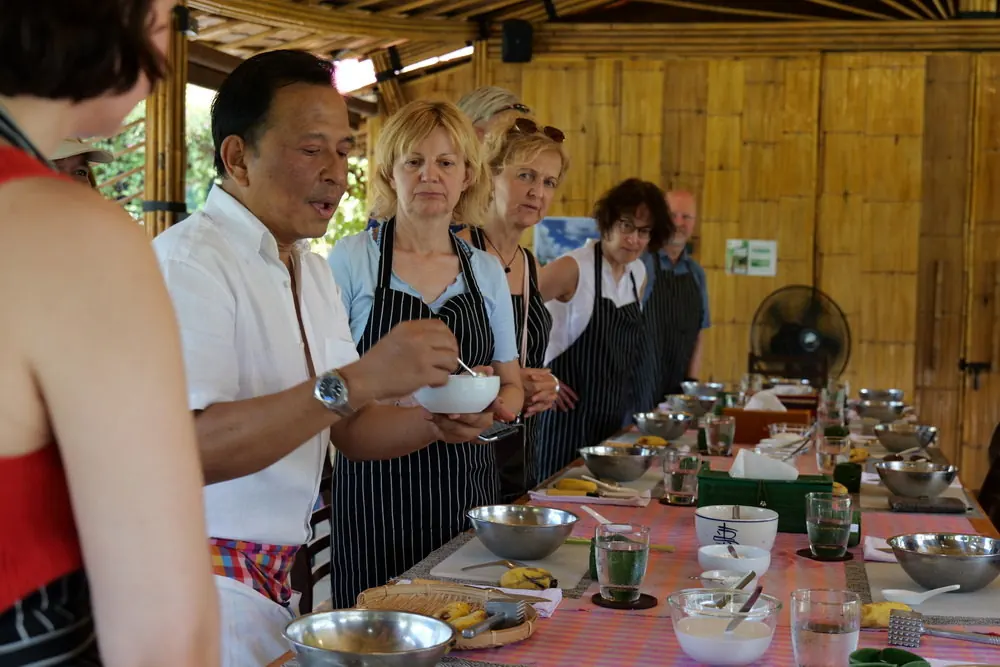
A class lets you watch preparation closely and ask questions while you cook. Notice the texture of chopped aromatics, the consistency of a paste, and how the chef adjusts seasoning. These details can be harder to judge from a recipe alone.
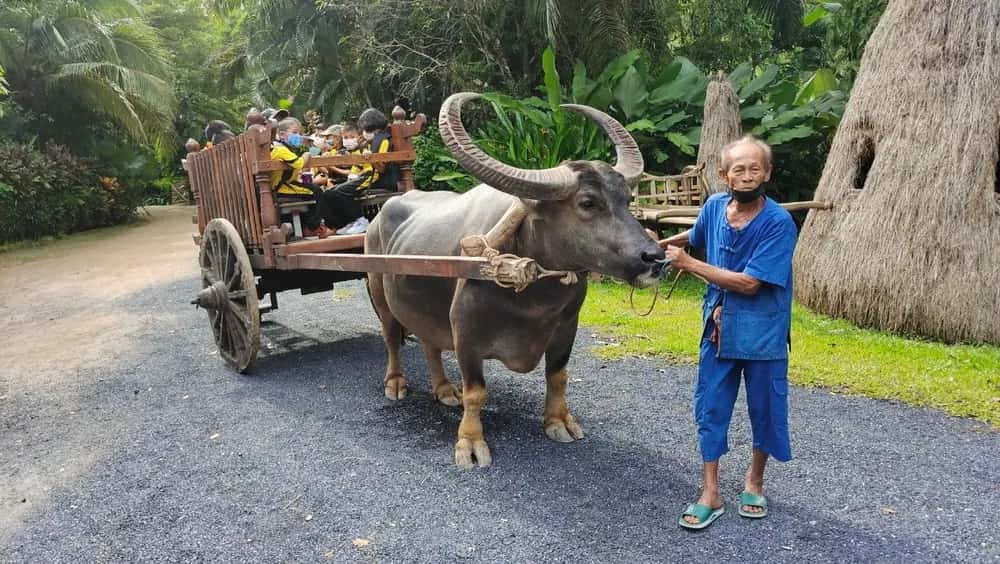
At Old Phuket Farm, learning Thai cooking happens in context. You're not just memorizing recipes; you're understanding the culture that created them.
The Five Fundamentals of Thai Cooking
Every cuisine has its foundational principles. When you learn Thai cooking, these five concepts will transform your understanding:
1. Balance of Flavors
Thai food balances sweet, sour, salty, and spicy in every dish. This isn't about equal parts of each; it's about harmony. A green curry might lean spicy, but there's sweetness from coconut milk and palm sugar, saltiness from fish sauce, and a hint of citrus from kaffir lime.
2. Fresh Aromatics
The trinity of Thai cooking - lemongrass, galangal, and kaffir lime - appears everywhere. Learning to work with these aromatics is essential. They should be fragrant, not woody; vibrant, not wilted.
3. The Power of the Mortar and Pestle
Thai cooks call it the "pok pok" after the sound it makes. Pounding ingredients releases oils and creates textures that no food processor can match. It's more work, but the flavor difference is remarkable.
4. Heat Control
Thai stir-fry happens fast and hot. Western stoves often can't match the BTUs of Thai kitchen burners, so technique becomes even more important. Learning to work with high heat without burning is a skill you'll use forever.
5. Fish Sauce Wisdom
Fish sauce is the umami backbone of Thai cooking. Learning how much to use - enough to add depth without making food taste "fishy" - is perhaps the most important skill you'll develop.
What You'll Actually Learn
A good Thai cooking course covers practical skills you can use immediately:
- Making curry paste from scratch (spoiler: it's easier than you think)
- Proper stir-fry technique and wok handling
- Creating Thai salads with the perfect dressing balance
- Soup construction - from broths to complex coconut milk-based dishes
- Working with rice noodles without them becoming mush
- Thai desserts featuring coconut, palm sugar, and tropical fruits
Learning at Different Levels
Whether you've never cooked Asian food or you're already comfortable with Thai basics, there's always more to learn:
Beginners
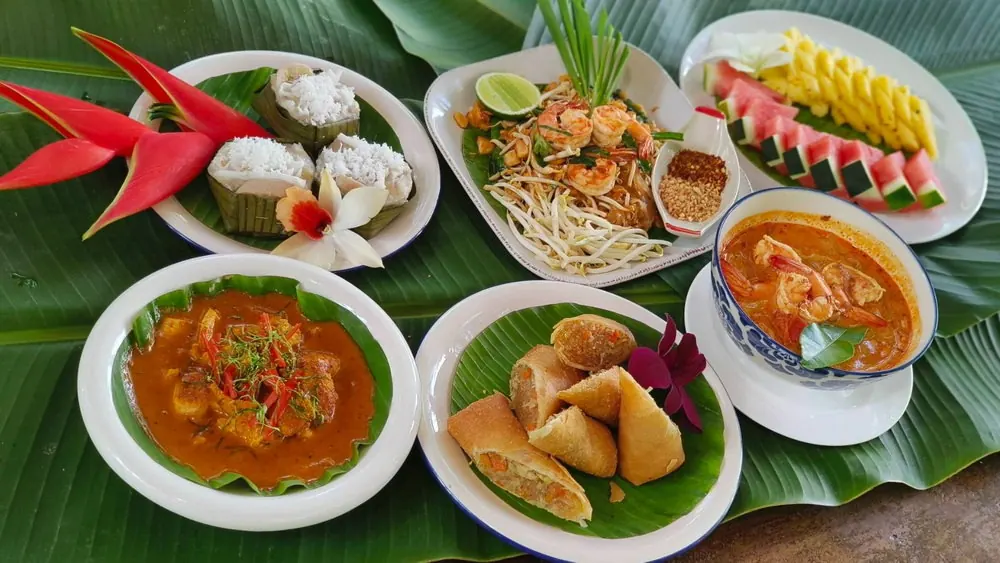
Focus on foundational dishes: Pad Thai, green curry, tom yum soup. These introduce key techniques and flavors without overwhelming complexity. A cooking class in Phuket is perfect for beginners.
Intermediate Cooks
Dive into regional specialties. Southern Thai cuisine (Phuket's specialty) differs significantly from Central or Northern Thai cooking. Learn the variations and what makes each region unique.
Advanced Learners
Explore royal Thai cuisine, fermentation techniques, or specialized dishes that take days to prepare. Some cooking schools offer multi-day intensive courses for serious enthusiasts.
Bringing It Home
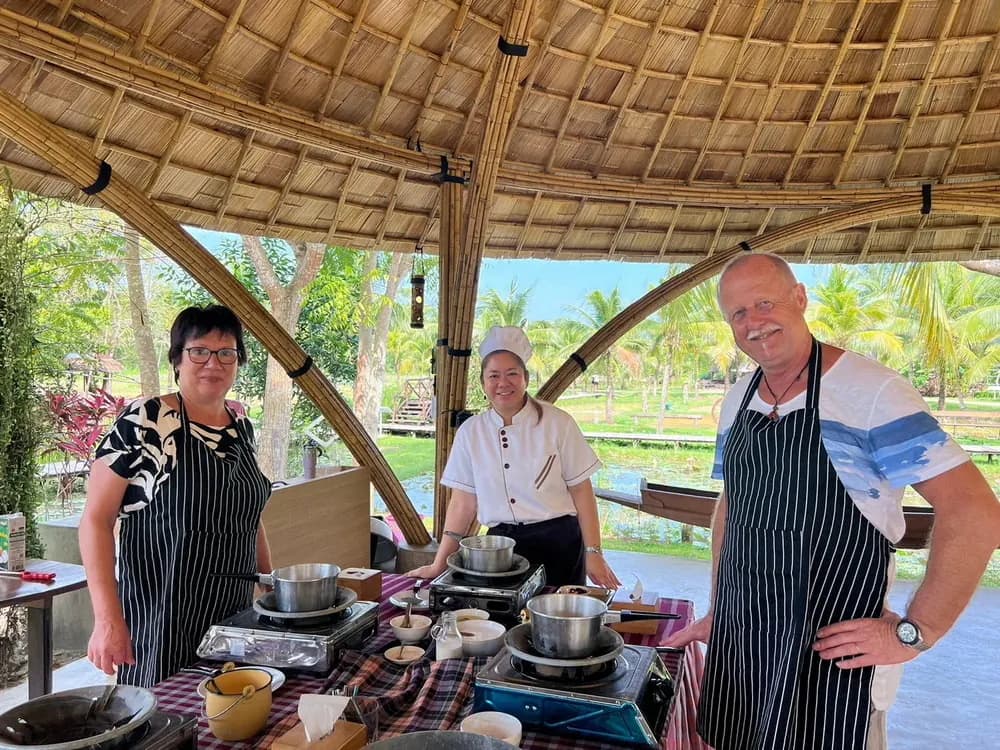
The real test of learning Thai cooking is what happens when you're back in your own kitchen. Here's how to set yourself up for success:
- Stock your pantry: Fish sauce, oyster sauce, palm sugar, and coconut milk are essentials
- Find an Asian market: Fresh ingredients make a huge difference
- Invest in a good wok: Carbon steel is traditional and affordable
- Get a granite mortar and pestle: Worth the counter space
- Keep your recipe cards: Most cooking classes provide these - use them!
The Joy of Cooking Thai
Once you learn Thai cooking, it becomes more than just making dinner - it's a connection to a culture, a creative outlet, and a way to share experiences with others. The skills you develop in Phuket will serve you for a lifetime.
And every time you grind spices in your mortar or taste-test a curry, you'll remember the farm where you first learned, the instructor who showed you the proper technique, and that magical moment when Thai cooking stopped being mysterious and started being yours.
Ready to Experience Old Phuket Farm?
Book your authentic Thai experience today and create memories that last a lifetime. We offer cooking classes, farm tours, and cultural activities for all ages.